HR: Knowledge that’s expensive but impractical
A story about the time I encountered truly impractical HR knowledge
1/17/20262 min read
Recently, I attended a postgraduate HR class – a popular program at a well-known university. The topic was:
"Methods, procedures, and tools for job description and job classification."
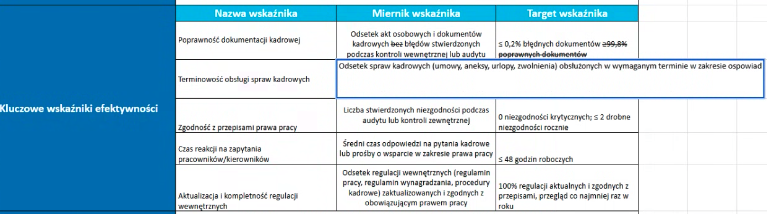
We were looking at the role of an HR Specialist, who also handles documentation, and one of their goals was: accuracy of HR records.
At that moment, the lecturer stepped in and said:
“Goals should be realistic, achievable, and motivating. Don’t set 100% accuracy – people make mistakes, so realistically it should be 98–99%. Let's do 99,8%”
As an example, it mentioned the sales department, where a salesperson can achieve targets at 80–90%, so in HR… we should apply a similar approach. Therefore, for HR documentation accuracy, 99% could be considered an acceptable goal.
And here I had to speak up:
“In my years of working in HR and collaborating with many companies, I have never seen a management or HR department accept even a single incorrect document in employee files. 100% accuracy isn’t an idealistic target – it’s the minimum standard of safety for the company.”
The response? Silence. Then the lecturer continued:
“Remember, we’re only human… everyone makes mistakes.”
The discussion went on for a few more minutes, without any final thoughts…
In HR, errors in documentation cost the company money and pose real legal risks.
Let’s look at it differently:
Would we accept 99% compliance with health and safety regulations?
Would we accept 99% correctness in a car repair, when the driver’s safety is at stake?
Would we accept 99% adherence to procedures by a surgeon during an operation?
Would we accept 99% compliance with data administration standards?
Mistakes happen everywhere. But there are roles and processes where there is no margin for error – and documentation is one of them.
100% accuracy might sound intimidating. But when employee safety, job security, and the company’s financial safety are on the line, there is no room for compromise. In such situations, it’s important to clearly state the full responsibility someone holds, and that it comes with appropriate compensation.
Comments like “Life doesn’t work that way” or “People won’t respond well to that KPI” are highly impractical advice that simply don’t apply in this context.
The moral of the story
Not every theory works in practice
– HR programs and training sometimes teach metrics and methods that are… useless in the real world.
Goals must make business sense
– in HR, an “achievable goal” is sometimes 100%, especially when it comes to compliance, documentation, or data security. 99% make no sense.
HR ≠ sales department
– not everything can be measured in percentages. In some areas, 50–90% compliance is simply unacceptable.
A question for you
Have you ever encountered “realistic goals” in HR that made no practical sense?
Or do you think that, in some areas, it’s worth saying out loud that 100% accuracy is the only acceptable standard?